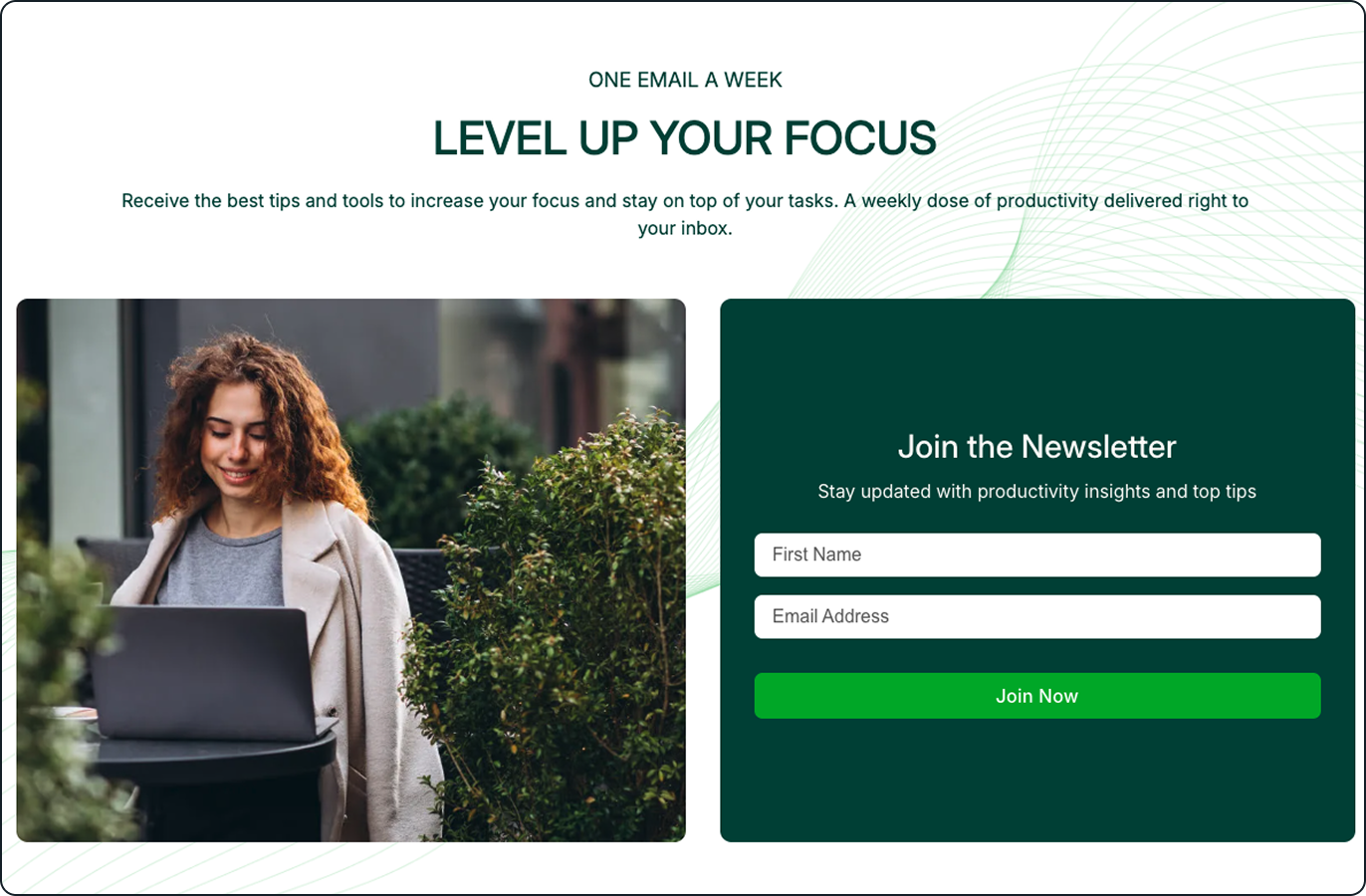
This project was designed as if I were working with a real creator who needed a landing page to grow their email list. I approached it the same way I would for a client request: understand the audience, create a simple but intentional layout, and build a signup flow that connects cleanly to ConvertKit.
The landing page was built entirely with HTML and CSS, using a clean, modern layout that highlights the creator’s message, value proposition, and call to action. The design is minimal on purpose. It avoids distractions and keeps users focused on one clear action: subscribing to the newsletter.
To complete the setup, I created a live form inside ConvertKit, configured fields and tags, and then embedded it directly into my code. This allows subscribers to enter into a real onboarding automation the moment they sign up. This workflow mirrors how creators and small brands actually use ConvertKit for newsletters, lead magnets, and content series.
I also treated the landing page like a production-ready asset. It’s fully responsive, with attention to spacing, typography, and readability across screens. The form includes basic validation and is styled to match the rest of the page, so it feels integrated, not just an iframe dropped in.
Overall, this project shows how I combine front-end development with marketing system knowledge to support real-world goals: subscriber growth, clean user experience, and an easy-to-manage workflow for creators and brands.