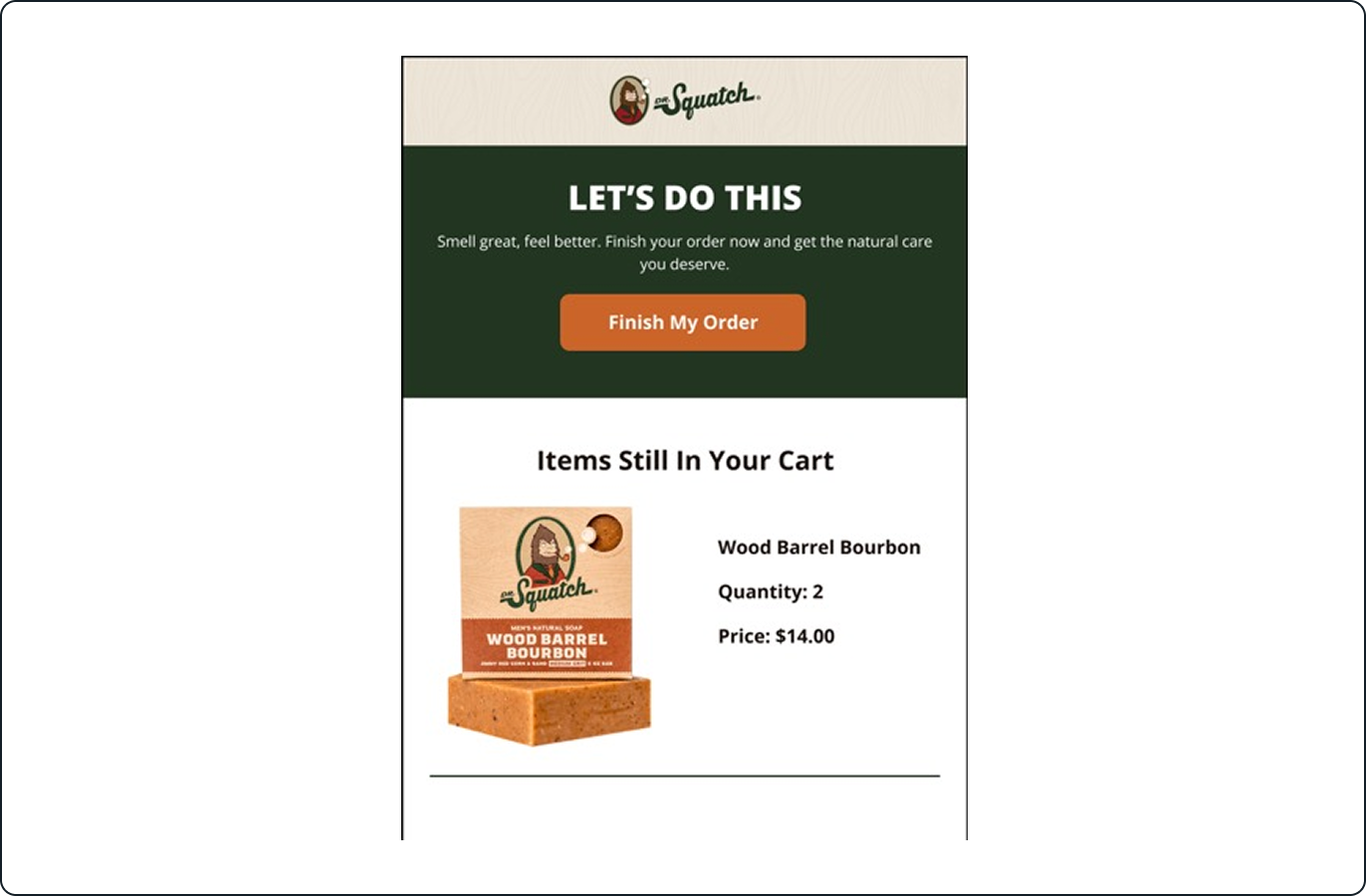
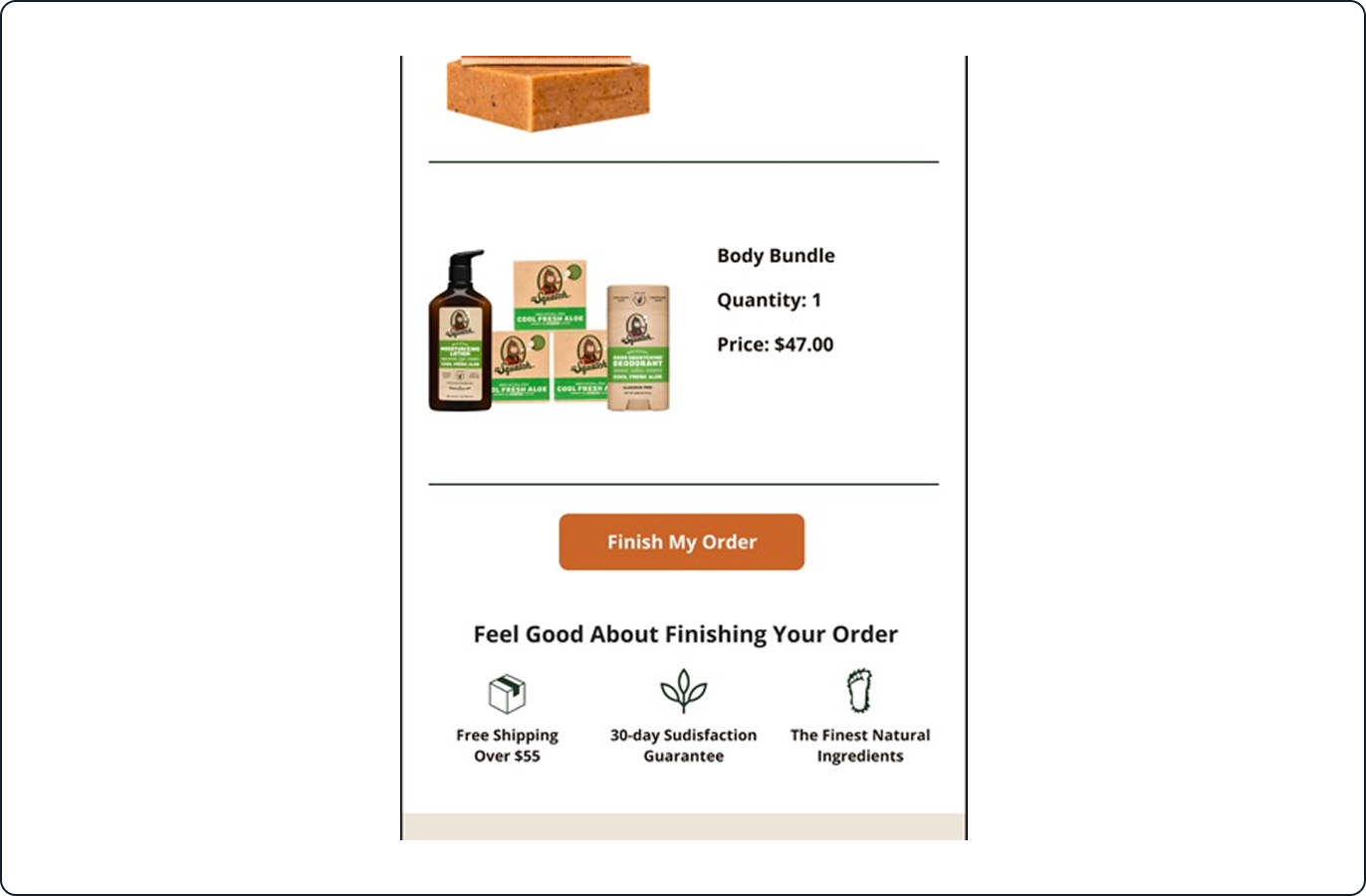
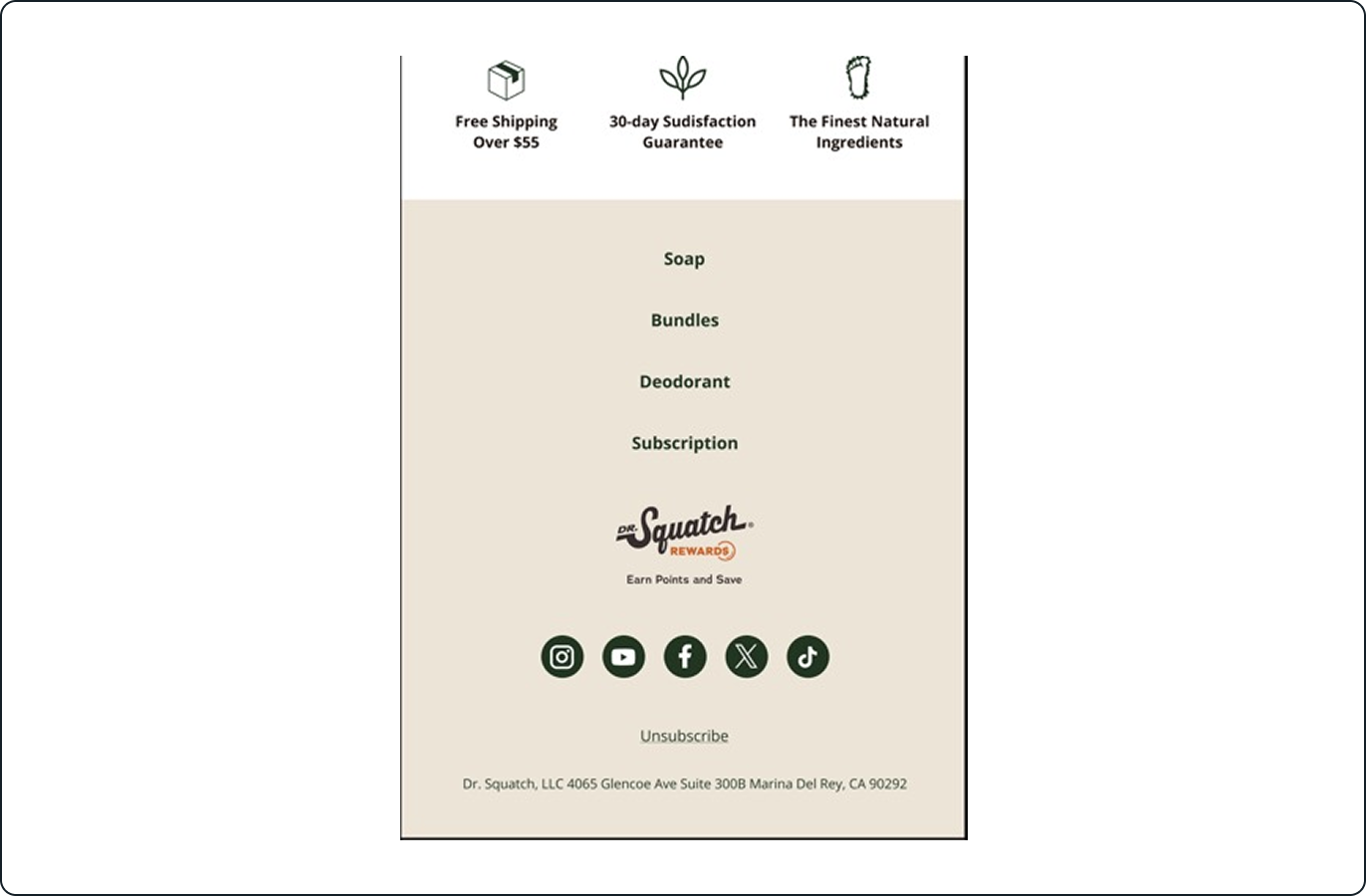
This project started by thinking about why customers abandon their carts in the first place. In many cases, shoppers leave because they get distracted, want to compare options, or still have questions about the product. Because of that, the abandoned cart flow needed to do more than just remind customers about their cart, it needed to address hesitations, reinforce product value, and make it easy for them to return and complete their purchase.
Once the goal of the flow was clear, I planned the structure of the sequence and mapped out what each email needed to accomplish. One important part of the strategy was segmentation. Returning customers are already familiar with the brand and typically need fewer touchpoints, so they receive a shorter five-email sequence focused on reminders and urgency. New customers receive a longer seven-email journey that includes additional reassurance, social proof, and a final incentive to help encourage their first purchase.
From there, I outlined the content for each email in the flow. The early emails focus on reminding customers about the items they left behind and reinforcing product benefits. As the sequence progresses, the messaging shifts toward building trust through testimonials and social proof, followed by urgency-driven messaging to motivate action. For customers who have not yet purchased from the brand, the later emails introduce a discount and a final reminder before the offer expires.
Design decisions throughout the flow focus on clarity and speed. Each email is built with a clear headline, a visible call-to-action, and a dynamic product section so customers can quickly see the items they left in their cart. The layouts are intentionally simple and easy to scan, making it easy for customers to return to their cart and complete checkout without unnecessary friction.
Overall, this project demonstrates how I approach lifecycle email strategy, segmentation, and conversion-focused messaging — building an abandoned cart flow that balances reminders, reassurance, and urgency to guide customers back to checkout.